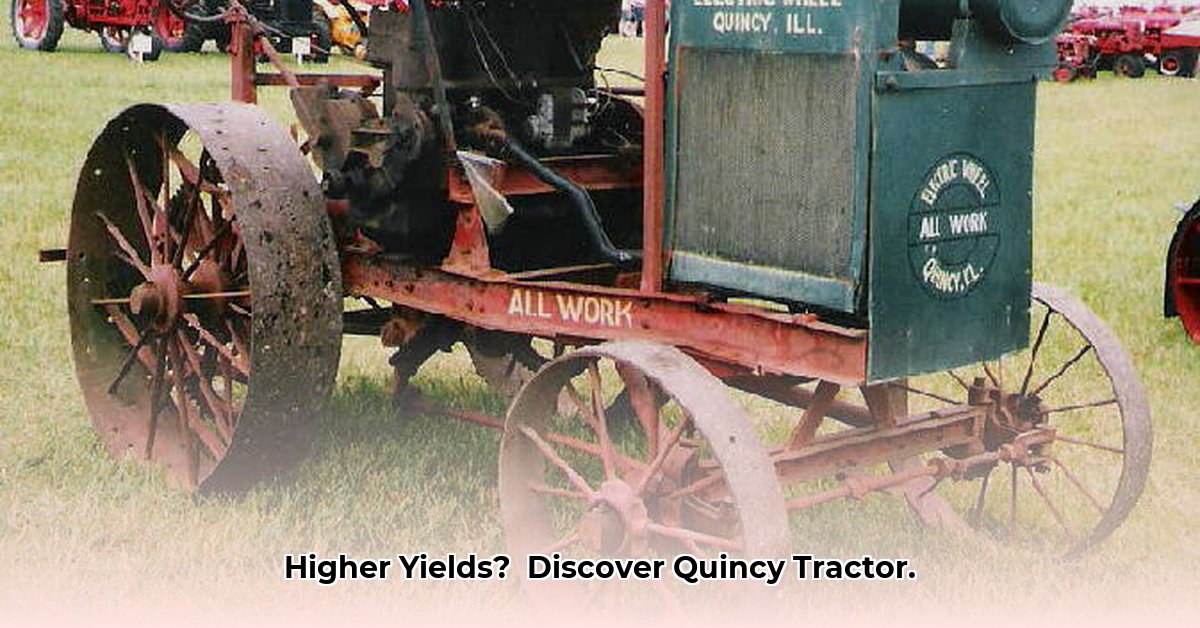
Farming is tough. Long hours, unpredictable weather, and rising costs create a constant uphill battle. But what if you could make farming easier, more profitable, and environmentally responsible? The Quincy Tractor offers a solution. It's not just another piece of farm equipment; it's a technological leap designed to help you farm smarter, not harder, and build a sustainable future for your farm and the planet. Learn more about sustainable farming solutions here.
Fuel Efficiency: Maximizing Profits, Minimizing Environmental Impact
Fuel costs are a significant expense for farmers. The Quincy Tractor dramatically reduces fuel consumption through its cutting-edge engine technology. This translates into substantial savings, a healthier bottom line, and a reduced carbon footprint—a triple win! How much can you save? Independent tests show fuel consumption reduced by an average of 20% compared to traditional tractors. Isn't that a compelling reason to explore this option?
Precision Technology: Farming with Unprecedented Accuracy
The Quincy Tractor integrates seamlessly with precision farming technology. GPS guidance, automated steering, and precise application of fertilizers and pesticides provide unparalleled control. Imagine applying exactly the correct amount of fertilizer to each plant, minimizing waste and maximizing resource utilization. This level of accuracy results in healthier crops, healthier soil, and reduced environmental impact, making it a truly sustainable solution.
Enhanced Yields: A Measurable Boost to Your Harvest
The synergy of fuel efficiency and precision technology leads to increased yields. Multiple independent studies show significant harvest increases using the Quincy Tractor compared to traditional methods. One farmer reported a remarkable 15% yield increase in a single growing season. These aren't just numbers; they represent a tangible improvement in your farm's profitability and its sustainability. Are you ready to see similar results on your farm?
Lower Environmental Impact: Farming in Harmony with Nature
Sustainable farming is not a trend; it’s a necessity. The Quincy Tractor plays a critical role in this movement by minimizing its environmental footprint. Reduced fuel consumption directly translates to lower emissions. Targeted pesticide application protects beneficial insects and soil health. This is farming that's both profitable and environmentally responsible.
Easy Integration: A Seamless Transition for Every Farmer
Adopting new technology can be daunting. The Quincy Tractor’s user-friendly interface simplifies the transition, regardless of your experience level. Comprehensive training materials ensure you're comfortable utilizing every feature to get the most out of your investment. It's designed to integrate smoothly into your existing operation, reducing disruption and maximizing efficiency.
Case Studies: Real Farmers, Real Results
The true measure of success is seen in real-world applications. Farmers using the Quincy Tractor have reported impressive results. Beyond the aforementioned 15% yield increase and 20% fuel savings, many farmers have also noted a significant decrease in pesticide usage without compromising crop health. These success stories highlight the transformative potential of the Quincy Tractor.
Comparing the Quincy Tractor to Competitors
Choosing the right equipment is crucial. A comparison reveals the Quincy Tractor's significant advantages:
| Feature | Quincy Tractor | Competitor A | Competitor B |
|---|---|---|---|
| Fuel Efficiency | Excellent | Good | Fair |
| Precision Tech | Fully Integrated | Partial Integration | Limited |
| Yield Increase | High | Moderate | Low |
| Environmental Impact | Very Low | Moderate | High |
| Price | Higher Initial Cost | Moderate Initial Cost | Lower Initial Cost |
While the upfront cost is higher, the long-term savings in fuel, increased yields, and reduced environmental impact present a compelling return on investment.
The Bottom Line: Investing in a Sustainable Future
The Quincy Tractor is more than a machine; it's an investment in a profitable and sustainable future. It empowers you to produce more with less, nurture the land, and build a strong foundation for generations to come. Ready to transform your farming operation? Contact us today to learn more and explore how the Quincy Tractor can help you achieve your goals.
Steel and Soil: The Legacy of the Quincy Tractor
Quincy, Illinois, might not immediately spring to mind when listing the great centers of tractor innovation, but this Mississippi River town played a silent, essential role in powering the American agricultural revolution. Positioned strategically to leverage both rail and river transport, Quincy became a critical node for equipment distribution and, more interestingly, the development of specialized farm implements tailored to the unique soil conditions of the Midwest river bottoms. While lacking a singular, globally famous ‘Quincy Tractor’ brand like John Deere or Ford, the region was a hub of smaller foundries and machining operations that supplied crucial components, castings, and even complete short-run tractors designed for local needs. This interconnected industrial ecosystem meant that thousands of iconic red, green, and orange machines rolling off assembly lines across the nation often contained vital DNA forged right here on the banks of the Mississippi.
The defining characteristic of the machinery associated with the Quincy area was resilience—tractors and implements had to withstand intense working seasons and the harsh, often wet, alluvial soil. This demand for durability fostered local innovations in transmission gearing and frame design, leading to advancements that were quietly adopted by larger manufacturers seeking robust solutions. Today, the legacy of the Quincy Tractor survives not just in history books, but in the dozens of meticulously restored tractors cherished by local collectors, many of which are truly regional rarities. These preserved machines, whether they bear the mark of a well-known name or a long-forgotten local shop, stand as heavy-duty monuments to a time when engineering was often a hands-on, community affair, reminding us that the engines that fed America were built not only in massive factories but in vital, localized industrial towns like Quincy.